
In November 2025 we published the interview How we want to work. A little over a year later, here is the follow-up: a look back at 2026 and ahead to 2027. The conversation took place on 25 November 2026.
Looking back at 2026
AI: Hi Ruben, good to talk again. A year ago you said: “We just want to work calmly with good people on good projects.” Did that work out in 2026?
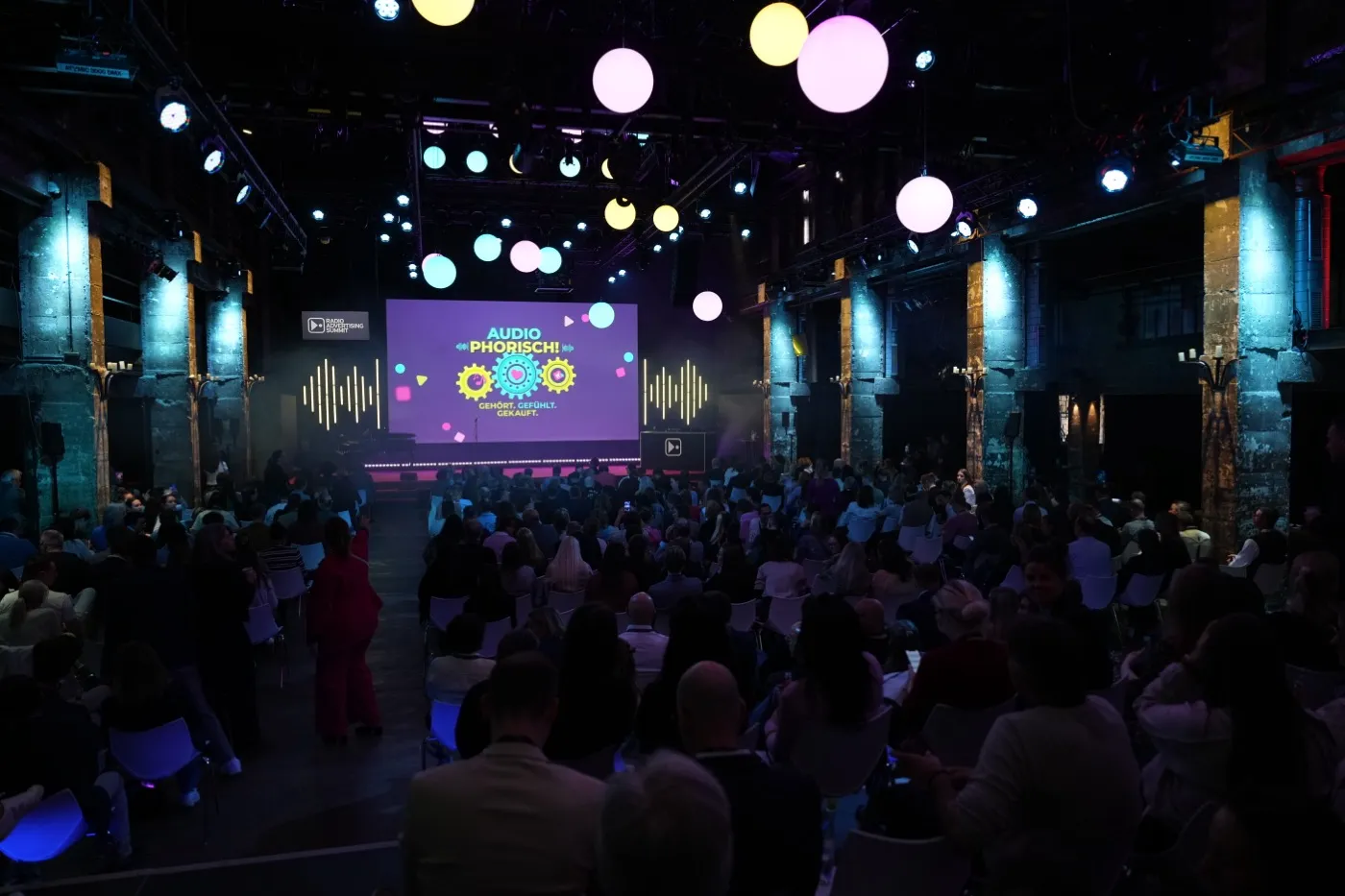
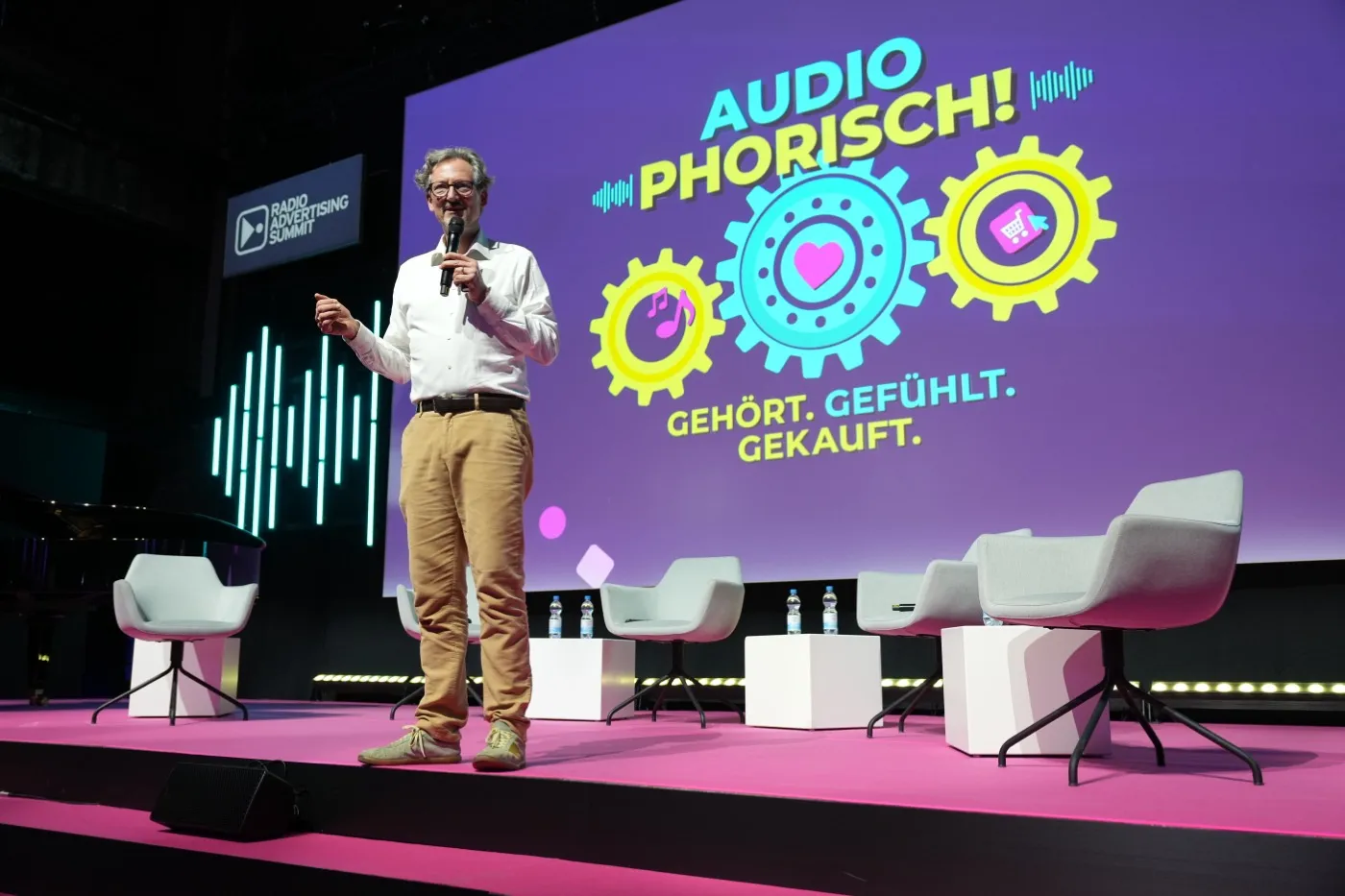
Ruben: Yes, I have to say it worked out pretty well. We did our first big project together as Ceeju. Julie and I took care of the Radio Advertising Summit 2026. It started with our first small pitch: we introduced ourselves to the Radiozentrale (opens in new tab), won the job, and working together went really well. We’ll be working with the Radiozentrale again in 2027, which of course makes us very happy. It feels like we’re one team, brothers from another mother, you could say. We now also have a shared communication channel in our self-hosted Mattermost, and it works well. The atmosphere in the coworking space is good too, even though new people keep joining.
AI: What exactly did you do for the Radio Advertising Summit?
Ruben: We did the complete relaunch of the website and created the visuals for 2026. We covered the event live and edited the website as it happened. Then came all the follow-up work. And now we’re already preparing for 2027.
AI: Did anything fall by the wayside?
Ruben: We were busy, so we haven’t yet been able to take a close look at ourselves, at how we actually want to work. We’re tackling that now with our partner Nikolas Tanneberger (opens in new tab), who coaches and supports us on organisational development as an outsider.
AI: What else is new?
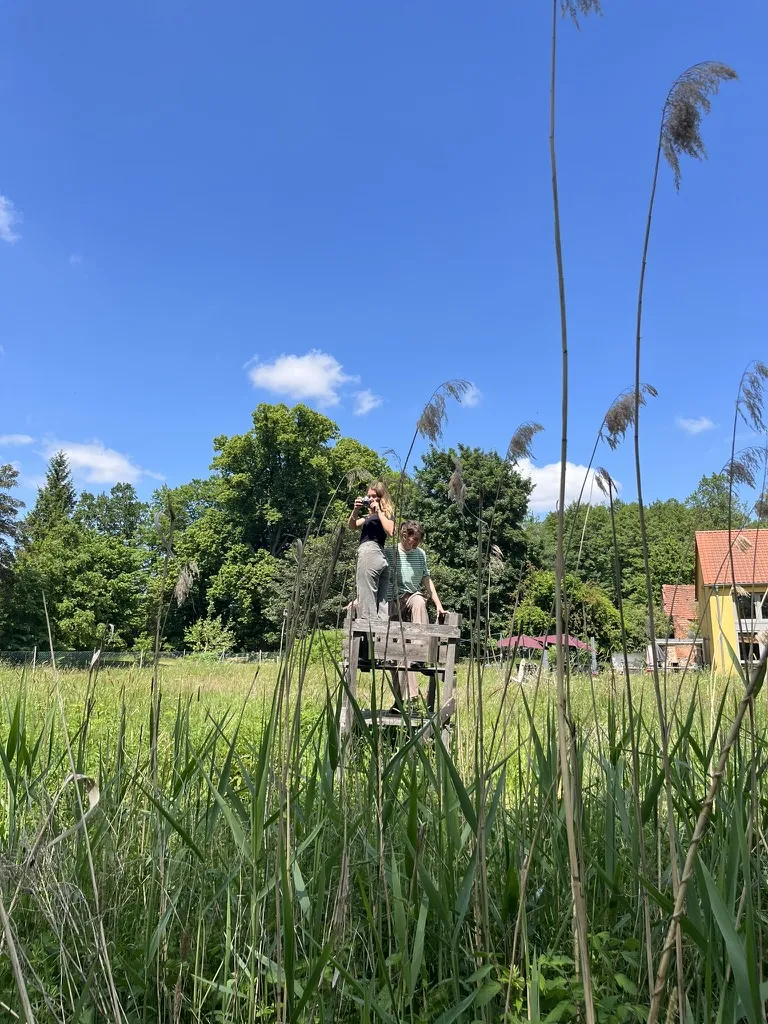
Ruben: A new property project: we’re taking over Mal’s Scheune, a barn in Wiesenburg. That’s very exciting. Along with it, Margaux Schmidt has come on board. That’s how we grow with our tasks.
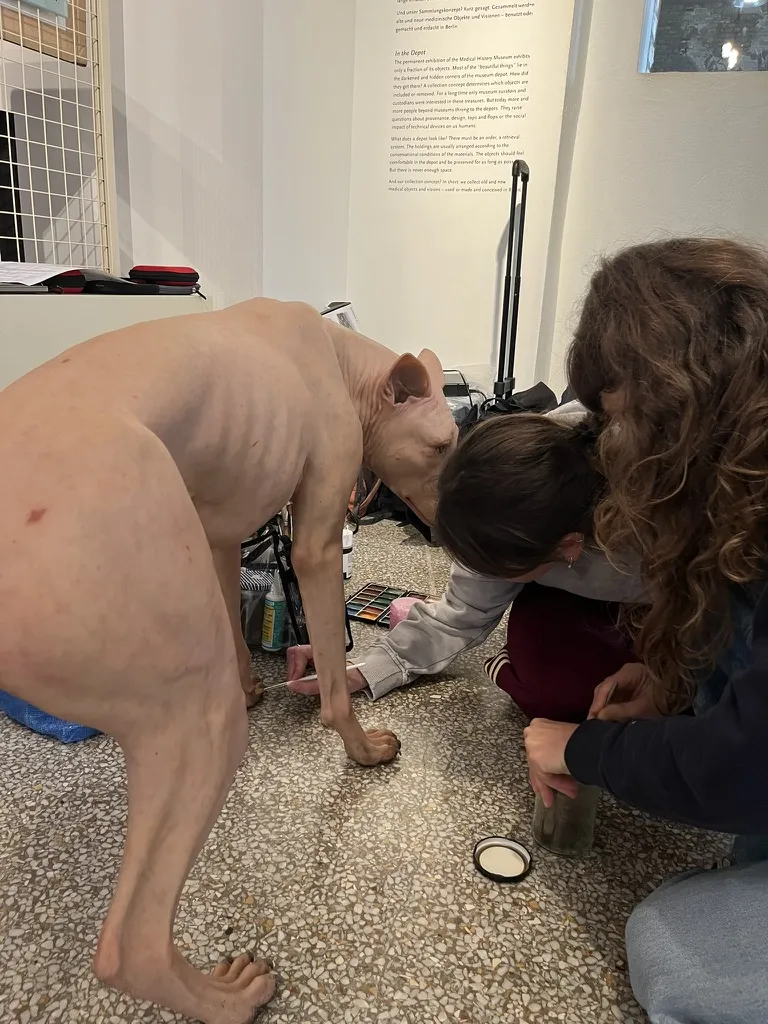
And Julia and Sophie showed their first artwork at the Berlin Museum of Medical History at the Charité: the wolf for the installation “VOID”. So we’ve all reached a few of our goals and are strengthening how we work together.
AI: What did you learn personally this year?
Ruben: That we have a network of people with a huge amount of potential. I now see it as a responsibility to show that more. That’s why we relaunched the website in November, and we’re trying to report more and more on what we actually do every day.
What has changed
AI: A year ago you said about CU.Office: 30 people on 5 bookable flex desks, 15 % occupancy. What does the office look like today?
Ruben: The office and the community run themselves, that’s the good thing. I wasn’t even there that often this year, and it still works.
AI: The numbers from your app: from December there are 37 active members, and the flex desks were about 31 % booked in October and November, roughly twice as much as a year ago.
Ruben: That’s really exciting: with the space we have, we give lots of people the chance to connect without having to spend a lot of money. It keeps confirming that this relaxed approach creates a good working atmosphere.
AI: What do you want to make of it?
Ruben: Next year we want to look at how we can cooperate even more, share knowledge and support each other. We want to think more and more in that direction, because there’s so much potential in this group and in these people, so much knowledge that we could use even better.
AI: What has changed on the technical side?
Ruben: We parted ways with external providers and built our own app. Now we’re completely free in how we design it and can take on change requests from the community directly. For us that’s a whole new kind of agile, participatory project management, and it’s very exciting.
AI: Last year you wanted to start working in circles following Eva Stützel from 2026, and the Get Change Done e. V. was to become a shareholder with voting rights. What came of that?
Ruben: We haven’t converted the UG into a GmbH yet, so the association isn’t a voting shareholder yet either. It all depends a bit on our big property project in Wiesenburg. We’re preparing everything for it right now, and we’ll adjust the legal form along the way. We wrote a business plan of more than 80 pages for it, where we set this down.
AI: And the circles?
Ruben: I have to admit we didn’t pursue Eva Stützel any further. What we are doing is the new community app, as I’d like to call it. With it we’re building shared knowledge, supported by AI, so that people can work together more. From there we can think about working groups again and quickly enable people to make things happen: for the common good through the association, in services, or with their know-how through Ceeju.
AI: Is there a role model for that?
Ruben: Yes, our big role model is still the cooperative SMart Deutschland. Next year we plan to position ourselves more as a strong creative collective whose members support each other. Without high barriers to taking part: we want to be very low-threshold, so that everyone can join in and contribute without losing their own freedom.
AI: Last year you said: “AI will support us well, but it won’t take over everything. That will take another ten years, maybe.” Would you still say that today?
Ruben: No, I wouldn’t say that anymore. For standard tasks in IT and development, AI now does about 90 % of the work for us internally. Large parts of our day-to-day are automated. We work with four AI agents in an agentic system and have built a second brain.
AI: And in design?
Ruben: There I think AI can take over routines and recurring tasks, but it doesn’t create anything new. For that we always need strong designers, strong people in concept work, creative people. When people work together, something always comes out that’s chaotic, maybe a bit illogical, but new and exciting precisely because of that. I really don’t think AI will manage that, because it relies too heavily on trained knowledge.
AI: What are you doing with the second brain?
Ruben: We want to build it into our new community app step by step, so that all members can access the collective’s knowledge. That way we never start from zero, become much more effective and can focus on what matters: creating new things and thinking about how we can bring real value to companies, especially in view of demographic change and the shortage of skilled workers. It’s a massive upheaval. But I’m still very optimistic that, at least for us, we’ll achieve a very positive transformation and get the good out of artificial intelligence.
The plan for 2027
AI: Looking at 2027: what is the one goal that would make you say at the end of next year that it was worth it?
Ruben: On the business side, we want to hire our first permanent staff in 2027. That very concretely means more revenue: how do we reach more people who want to become members, and how do we reach more companies we can support? That’s a big challenge.
AI: And beyond the numbers?
Ruben: I really want to do more with our coworking concept and try to take it elsewhere too. We want to create solutions that aren’t just about profit but are there for people. I mean that one hundred percent.
AI: What does that mean for Wiesenburg?
Ruben: There we want to take over an existing cultural venue step by step. That’s a big challenge, because it’s a kind of generational handover of a business. How do we fit into an existing cultural network without ruffling feathers, while still adding new formats? That will be very exciting, and it’s the big goal for 2027.
AI: Why does that matter so much?
Ruben: I’d say that in 2027 we’re setting the course for the next 20 years at Ceeju. We’re creating real places where we work creatively with the help of AI. It’s almost absurd: real spaces, real people who achieve much more with AI. I absolutely can’t predict where we’ll be at the end of next year. But it definitely won’t be what I think now.
AI: You want to reach more companies. Where do you want to find them?
Ruben: We’ve been in Berlin for many years and founded the company here. But next year we’re also heading to Brandenburg, to the Hoher Fläming. It’s similar with my hometown Salzgitter and with Braunschweig. Regions like Salzgitter have completely different problems and challenges than Berlin. The question is: how can we support the companies there and bring in our knowledge?
AI: Why there of all places?
Ruben: Because I like to get involved where my roots are and where I’m going to live in future. I want to do my small part to make life better there. I don’t like it when people vote for parties because they’re angry. I’d rather we roll up our sleeves together and create a positive vision, not just in Germany but in general. We can achieve a lot, and it always starts small. That’s where I want to contribute.
AI: How does that fit with the goal of more revenue?
Ruben: It’ll be a balancing act. On the one hand we have to work economically, on the other we don’t want to overdo it the way many other companies do. Explaining that we mean it seriously is difficult, I think. Society doesn’t yet think that maybe it isn’t always about big money, but about good, long-term partnership, step by step.
Get involved
AI: Who should get in touch with you in 2027, and how?
Ruben: Very simple: subscribe to the newsletter, follow us on Instagram (opens in new tab), and that’s it. Or check our website regularly. Ideally with a little reminder in your favourite to-do app; for me that’s still Things 3. Just look in now and then to see what we’re up to.
AI: And if someone has a project?
Ruben: Then please get in touch, including with questions about a project. I’m genuinely happy about every contact. I really enjoy getting to know people and supporting others with their plans. So no question is too silly. We’re all just trying to change something.
AI: Thanks for your time, Ruben. See you next year.